
Penn Air Repair Is Hiring: Why an Aircraft Maintenance Technician Career Thrives in Our Hangar
Published by:
Penn Air Repair
Step onto the ramp on an early morning at Heritage Field Airport (KPTW), and you immediately feel the tempo that defines general aviation. Propellers turn through brisk morning air, hangar doors roll open, and pilots prepare for cross-country departures. Behind every safe flight is the unseen dedication of a skilled Aircraft Maintenance Technician (AMT) who inspects, troubleshoots, and signs off each airframe with absolute integrity.
When you look for your next professional aviation home, the environment you choose directly impacts your craftsmanship, your sanity, and your future. At Penn Air Repair, we are opening a full-time position for a qualified Aircraft Maintenance Technician who wants to practice serious maintenance craft in a supportive, modern facility.
The Daily Craft of an Aircraft Maintenance Technician on Our Floor
Every day on our maintenance floor brings real technical variety that keeps your diagnostic instincts sharp. Rather than repeating a single assembly-line task, an Aircraft Maintenance Technician at Penn Air Repair takes ownership of complete aircraft systems. You will work across a diverse customer fleet that includes trusted single-engine trainers, high-performance cross-country singles, and sophisticated multi-engine aircraft.
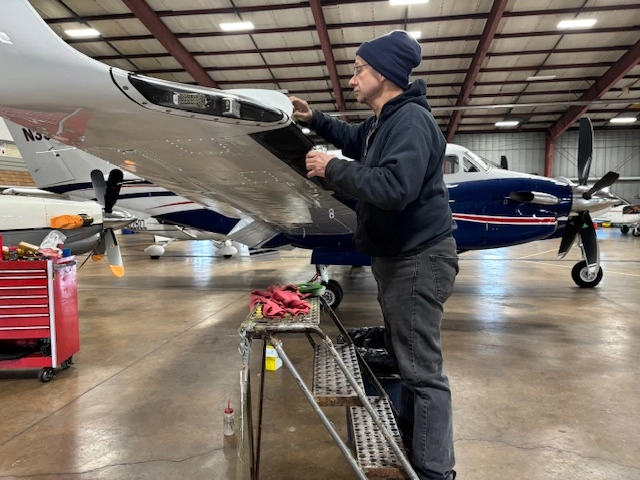
Our technicians perform thorough visual and functional inspections, systematically identifying cracks, leaks, corrosion, and wear before they can threaten flight safety. You will conduct comprehensive annual inspections and rigorous 100-hour inspections, evaluate structural integrity, and ensure every control cable meets exact manufacturer cable tension specifications.
When an unfamiliar mechanical or electrical discrepancy appears, you will dig down to the root cause using technical manuals, wiring schematics, and digital diagnostic tools. Disassembling components, installing replacement hardware, and testing complex assemblies back to airworthy condition is the heart of what our aircraft maintenance team accomplishes together every week.
Precision documentation remains equally vital on our floor. You will maintain detailed records of every inspection, repair, and part replacement in full compliance with FAA Part 91 and Part 135 standards. That logbook entry carries your signature, representing your personal commitment to the pilots and families who fly these aircraft.
Qualifications and Practical Standards You Bring to the Team
To maintain the high safety standards our clients rely on, we look for candidates who already possess a solid mechanical foundation and an FAA credential. You must hold an active FAA Airframe and Powerplant (A&P) certificate along with a minimum of three years of full-time maintenance experience on fixed-wing piston aircraft.
Your technical expertise should encompass a strong grasp of aircraft mechanical systems, direct-current electrical circuits, landing gear actuators, hydraulics, and pneumatics. Because our facility regularly handles high-performance piston engines alongside turboprop aircraft, prior hands-on experience with turbine platforms like the Pratt & Whitney PT6A is an advantage for your application.

Beyond mechanical aptitude, successful candidates bring sharp troubleshooting skills and meticulous attention to detail. You should feel comfortable working in confined aircraft spaces, wearing appropriate protective equipment, climbing inspection ladders, lifting heavy components, and standing for extended stretches during deep teardowns.
Most importantly, you must be a dependable team collaborator. Aviation maintenance is an interdependent discipline where clear communication with fellow technicians and shop leadership protects airworthiness and keeps turnaround schedules dependable. You can review the full qualifications and physical requirements in our official Aircraft Maintenance Technician job description.
Hangar Culture and the Value of Genuine Work-Life Balance
Many skilled A&P mechanics leave the industry or burn out because typical commercial aviation jobs demand brutal graveyard shifts, freezing outdoor line maintenance, and unpredictable mandatory overtime. We built our shop culture around a different set of priorities because we believe sustainable craftsmanship requires a healthy work-life balance.
Our maintenance work takes place inside a spacious, well-lit, and fully heated aircraft hangar located at Heritage Field Airport (KPTW) in Pottstown, Pennsylvania. You can troubleshoot electrical buses or adjust fuel metering units in comfort, regardless of winter freezes outside the door.
Our hangar operates primarily during regular daytime business hours from 9:00 AM to 5:00 PM. Weekend assignments and holiday work are rarely required, giving you predictable evenings and consistent weekends to recharge with your family and pursue your personal goals.
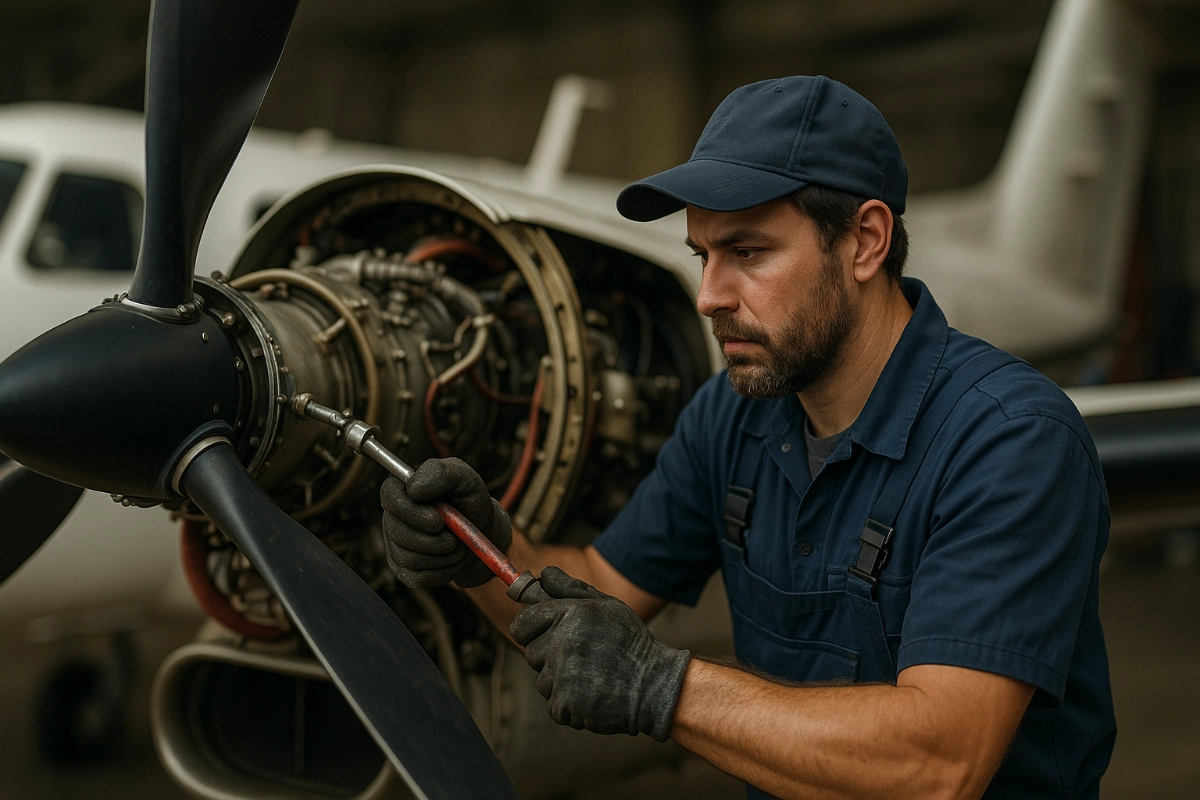
We also equip our technicians with the modern tooling and technology required to do their best work. As a Savvy Certified facility, we embrace Reliability-Centered Maintenance principles that emphasize intelligent diagnostic analysis over wasteful parts swapping. You will have access to calibrated diagnostic equipment, specialized borescope optics, and dynamic balancing systems that make your workday productive and professionally rewarding.
Career Trajectory and Expanding Your Technical Horizons
Joining our maintenance crew is an opportunity for personal growth that expands your capabilities far beyond routine oil changes. In our hangar, an ambitious Aircraft Maintenance Technician gains direct exposure to the full spectrum of general aviation and business turboprop operations.
If your background is primarily in single-engine piston aircraft like Cessnas and Pipers, working with us provides a supported technical pathway to master advanced systems. You will learn the nuances of pressurized airframes, complex multi-engine electrical buses, and turboprop systems powering King Air, Pilatus PC-12, and Cessna Caravan aircraft.
You will also expand your diagnostic capabilities with specialized procedures like dynamic propeller balancing. Learning how to mount optical tachometers, place vibration accelerometers, and calculate precision balance weights teaches you to diagnose subtle airframe harmonics that other mechanics overlook.
For technicians seeking long-term professional stature, general aviation shop experience provides the comprehensive systems knowledge required to earn an FAA Inspection Authorization (IA). By mastering airframe alterations, major repair Form 337 filings, and complex annual inspections alongside our veteran inspectors, you build the regulatory depth needed to take full ownership of aircraft airworthiness throughout your aviation career.
Take the Next Step in Your Aviation Maintenance Career
If you take pride in turning wrenches with precision, solving tough diagnostic puzzles, and working alongside professionals who respect your craft, we invite you to apply for our Aircraft Maintenance Technician position today through our careers portal. Our team is eager to review your qualifications, discuss your mechanical background, and show you what makes our hangar culture an ideal place to grow your aviation career.